How to Upload Etherscan Transaction to Cointracking
How Chainlink Solved Ethereum's "Random Problem"
Random numbers and Blockchains haveever been in disagreement. Until now, a verifiably random part has never existed on the Blockchain.
The problem stems from the fact that when transactions are mined, they demand to be confirmed by more 1 node on the network. This means that every node must come up to the aforementioned conclusion. And then, if a role was truly random, each node would come to a different determination, resulting in an unconfirmed transaction.
There take been workarounds that result in a pseudo-random generation, but until at present all known methods have been either not truly random, or vulnerable to manipulation.
Introducing Chainlink
"The Chainlink network provides reliable tamper-proof inputs and outputs for complex smart contracts on any blockchain." — chain.link
Blockchains and smart contracts are bully at performing computation according to a fix of immutable rules. The trouble is that the rules tin can only exist applied to information inside the organization. Getting verifiable data from outside the system is difficult.

Chainlink's mission is to solve this by providing decentralised oracles, enabling the Blockchain to access data outside of its ecosystem. Oracles are essentially a bridge between the Blockchain and the outside earth.
That's so random
In a recent article, Chainlink announced the release of their new Verifiable Random Office (VRF). The function, at present available for developers to integrate into their DApps on several testnets, enables smart contracts to retrieve random numbers which are verifiable on-chain. This means no more vulnerabilities and guaranteed randomness.
How information technology works
If you want to generate a random number in Javascript, the code is pretty simple:
Math.random(); In a single execution of one line, yous call up a random number.This is not how VRF works.Unlike Javascript, VRF works over a few transactions.
Here's the sequence of events:
- Your smart contract requests a random number from VRF,via transaction.
- VRF generates that number and verifies it.
- VRF prepares the response.
- VRF and then sends the number back to your contract,via some other transaction.
For point 4 to succeed, your contract needs to implement a known part and then that VRF tin phone call dorsum with the result. But how tin this be implemented in your project?
How to implement randomness
Let's create a new smart contract chosenRandomGenerator, this is where we'll make the call to VRF and receive the result.
Step 1: Create the consumer contract
We're going to use a contract provided by Chainlink calledVRFConsumerBase, which is an abstract contract that defines the minimum functions we need to swallow VRF. Let's define the beginnings of our "RandomGenerator.sol" file like this:
pragma solidity ^0.half-dozen.2; import "https://raw.githubusercontent.com/smartcontractkit/chainlink/develop/evm-contracts/src/v0.six/VRFConsumerBase.sol"; contract RandomGenerator is VRFConsumerBase { constructor(address _vrfCoordinator, accost _link) VRFConsumerBase(_vrfCoordinator, _link) public { } } VRFConsumerBase is all the same in late testing, so information technology's not even so available in production packages. This is why we are using an HTTP URL from Github for the import.
The base contract takes 2 parameters representing the coordinator and the accost of the LINK ERC20 token. These are stock-still addresses on each network (more on this later).
Step 2: Overriding functions
VRFConsumerBase comes with 2 functions vital to the VRF procedure.
The showtime is calledrequestRandomness which is already implemented, and which we don't need to override. This is the function thatmakes the initial call to VRF.
The next is chosenfulfillRandomness, and this is the function whichVRF callsback to when information technology has generated the number. We can override this to perform deportment on the random number when information technology gets chosen.
Our contract is simply going to shop the generated random number in a country variable, chosenrandomNumber, so that nosotros can query it when it's finished. It should look something like this:
pragma solidity ^0.6.two; import "https://raw.githubusercontent.com/smartcontractkit/chainlink/develop/evm-contracts/src/v0.6/VRFConsumerBase.sol"; contract RandomGenerator is VRFConsumerBase { bytes32 public reqId; uint256 public randomNumber; constructor(address _vrfCoordinator, address _link) VRFConsumerBase(_vrfCoordinator, _link) public { } function fulfillRandomness(bytes32 requestId, uint256 randomness) external override { reqId = requestId; randomNumber = randomness; } } We've added the override for thefulfillRandomness role, and ready the state variablesreqId andrandomNumber to equal the values that the role receives.
Footstep three: Generating the number
As I mentioned earlier in step 1, in that location are a few addresses and other values expected by the office calls that need to be passed in as parameters.
When deploying the contract and calling the constructor, it needs the VRF coordinator addressand the address of the LINK token on the network. On the Ropsten testnet these are:
- VRF coordinator:
0xf720CF1B963e0e7bE9F58fd471EFa67e7bF00cfb - LINK address:
0x20fE562d797A42Dcb3399062AE9546cd06f63280
When calling therequestRandomness part, we need to pass in the key hash by which randomness is generated, the fee for the random generation (in LINK tokens) and the seed to generate the randomness against (this concluding one is provided by us). The function signature looks like this:
function requestRandomness(bytes32 _keyHash, uint256 _fee, uint256 _seed) public returns (bytes32 requestId) On Ropsten, the parameter values are:
- Fundamental hash:
0xced103054e349b8dfb51352f0f8fa9b5d20dde3d06f9f43cb2b85bc64b238205 - Fee (1 LINK):
1000000000000000000 - Seed: [whatever_you_want_your_seed_to_be]
And then our call would look something similar this:
// set ropsten key hash bytes32 keyHash = "0xced103054e349b8dfb51352f0f8fa9b5d20dde3d06f9f43cb2b85bc64b238205"; // set ropsten LINK fee fee = 1000000000000000000; // fix example seed seed = 123456789; // brand call to asking randomness bytes32 reqId = rand.requestRandomness(keyHash, fee, seed); When the result comes back, the value will be present and can exist retrieved by calling:
rand.randomNumber; Try information technology out yourself
This department is going to walk through how nosotros can get a random number from VRF using Remix IDE and Metamask. Make sure you lot have Metamask extension installed on your browser before continuing.
- Caput over to Remix IDE.
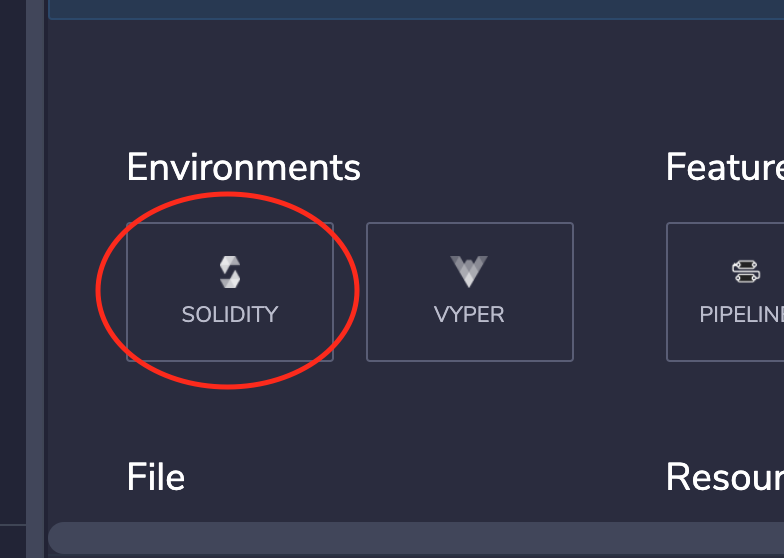
- If yous've not used Remix before, make certain you're using Solidity, as shown in figure 3.
- Create a new file called RandomGenerator and paste in the code from effigy 2.
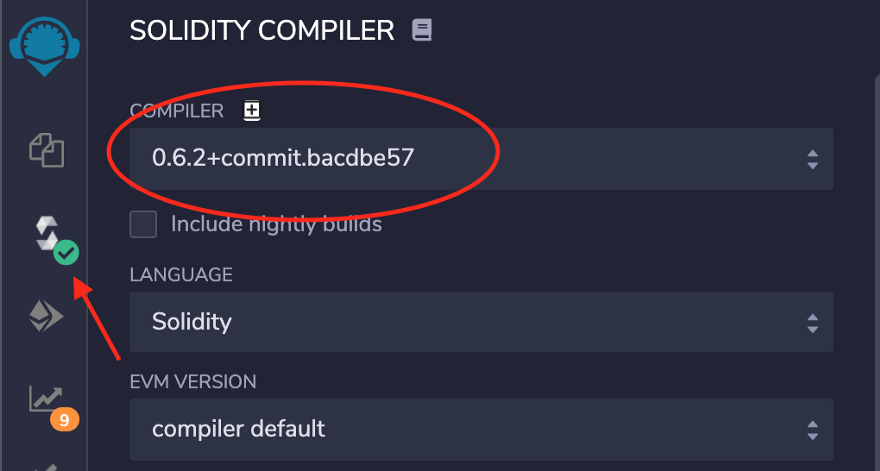
- Using the left card, click on the Solidity icon and chose 0.6.2 compiler version, as shown in figure iv.
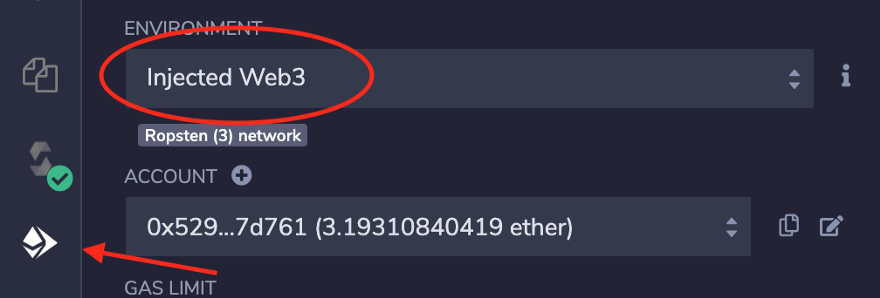
- Then, click on the button only below that and chose "Injected web3" in the dropdown, equally shown in figure 5.
- This should prompt a connection request from Metamask which yous should accept.
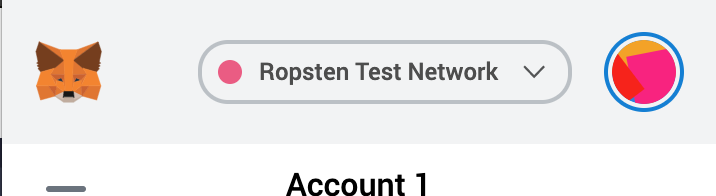
- Make sure you're using the Ropsten testnet on Metamask, as shown in figure 6.
- Make certain yous have some Ropsten Ether in your Metamask business relationship, which yous tin can asking here.
- Heading dorsum to Remix, on that same tab, you should run across an orange "Deploy" push button, click that push button and accept the contract deployment request from Metamask.
- One time deployed, we demand to make certain the contract has LINK tokens and so it can request random numbers. Head over the Ropsten LINK faucet and paste in your Metamask address, then that you receive 100 LINK in Metamask.
- Metamask won't know where the LINK token is on Ropsten, and then we demand to add information technology. In Metamask, to the left of your account proper name, click the burger symbol, and then click "Add together Token" at the bottom.
- Under "Custom Token", add the accost:
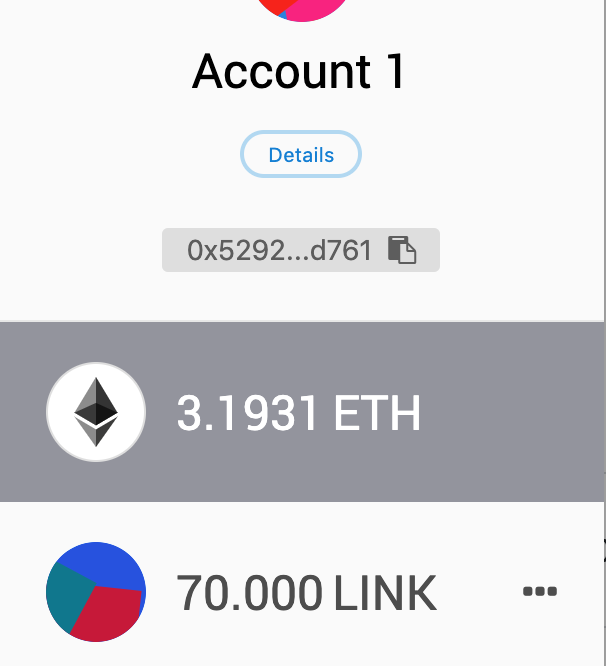
0x20fE562d797A42Dcb3399062AE9546cd06f63280. The residue of the details should fill in automatically. When submitted, providing you lot requested LINK to the correct address, you should encounter 100 LINK in your account. Figure 7 shows an account with 70 LINK.
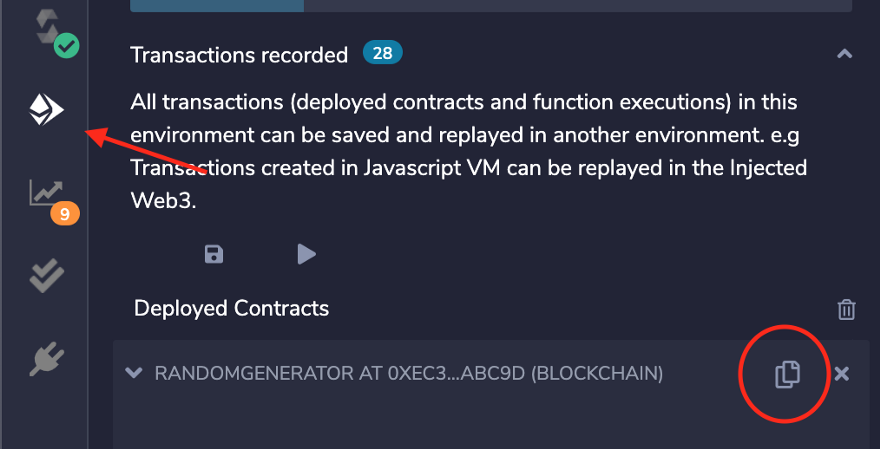
- Back to Remix, copy the address of the deployed contract past clicking the button circled in figure viii.
- Now we're going to send the contract some of our LINK. Head back onto Metamask, and click on the iii dots next to the 100 LINK. Paste the contract accost and send 10 LINK. One time the transaction has been confirmed, move to the next step.
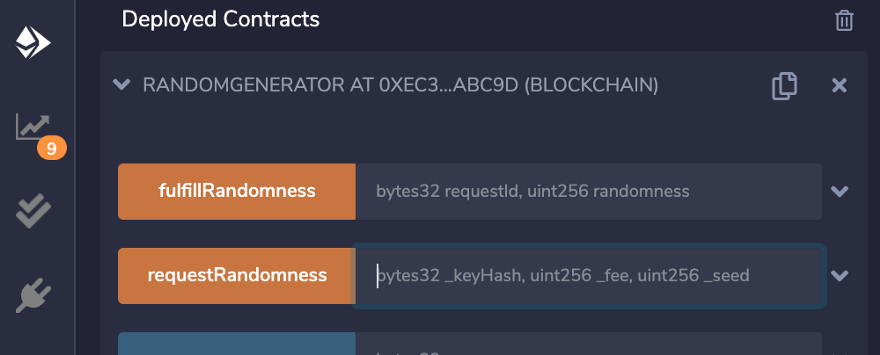
- In Remix, we tin can at present asking randomness. In the same tab, scrolling downwards you'll find more orange buttons representing public functions, as shown in figure nine. Click on the arrow to the right of
requestRandomnessto aggrandize the parameters.
- Paste in each of these values into the three input boxes in guild:
0xced103054e349b8dfb51352f0f8fa9b5d20dde3d06f9f43cb2b85bc64b238205,1000000000000000000,123456789(or whatever you desire your seed to be). And then hit "Transact"!
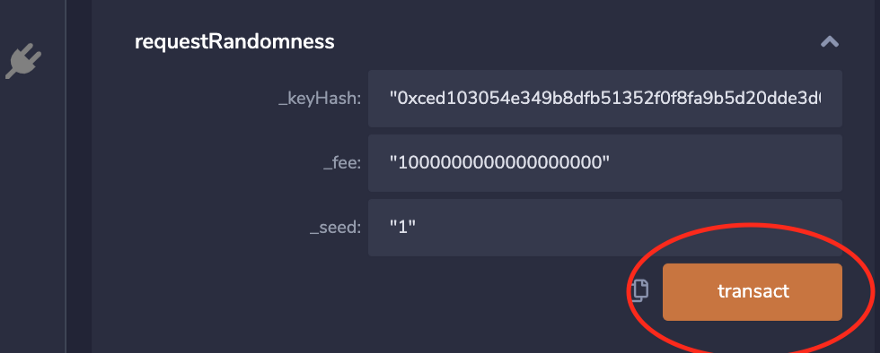
This may accept some time, so you should keep an eye on the transaction in Etherscan that the output terminal gives y'all.
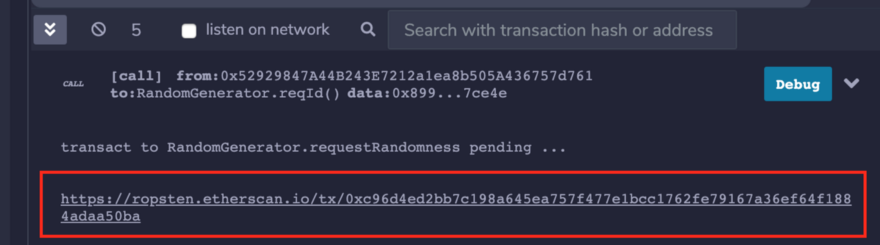
Once that transaction has completed, we need to wait for VRF to generate the random number and send information technology back to our contract. After a few minutes, check if your contract has received the random number by clicking the blue "randomNumber" button beneath the orange button where we sent our transaction in Remix, every bit shown in figure 12.
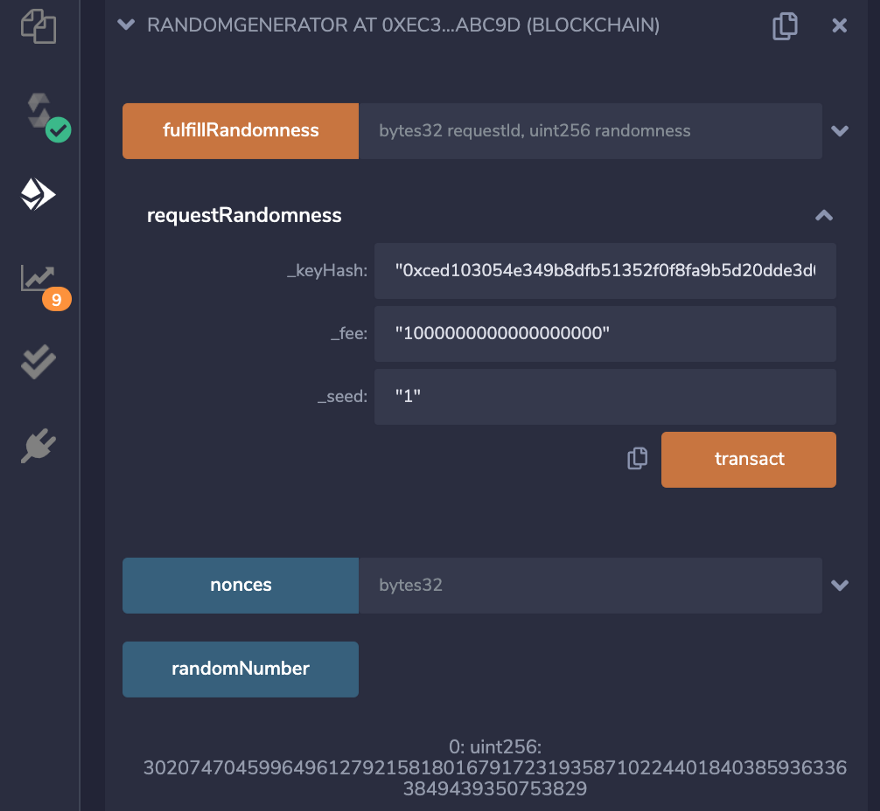
If all goes well, you should have a random number like me, which is30207470459964961279215818016791723193587102244018403859363363849439350753829.
Congratulations!
Determination
Chainlink has demonstrated that verifiable random numbers are now possible in smart contracts. We've explained how the mechanism works, how to integrate the code into smart contracts, and a demonstration of retrieving random numbers using the Remix IDE.
Further Reading
If you lot're interested in Blockchain Development, I write tutorials, walkthroughs, hints, and tips on how to get started and build a portfolio. Check out some of these resources:
Blockchain Development Resources To Follow Correct Now
- Ethereum Name Service (ENS)- An Overview
- Tweaking CoinCodeCap Ranking Algo
- How Sami Lost $5000 to Freewallet
- Ethereum versus Bitcoin
- What are Dapps? (An ultimate guide)
- What is IOTA Cryptocurrency? Explained For Beginners
- Making Sense of Ethereum Transaction History With Etherscan

Source: https://coincodecap.com/how-to-generate-random-numbers-on-ethereum-using-vrf
0 Response to "How to Upload Etherscan Transaction to Cointracking"
Post a Comment